
For those captivated by the wilderness, the allure of Rare dog breeds that look like wolves offers a unique opportunity to bring the untamed spirit into a domestic setting. These extraordinary canines, whether direct descendants of wolves or meticulously bred for their appearance, present a fascinating blend of wild aesthetics and specialized care requirements.
Key Implications
- Extreme Rarity: These breeds are exceptionally rare globally, with populations often numbering only a few thousand individuals, distinguishing them as specialized companions rather than common household pets.
- Genetic Proximity and Appearance: Many of these breeds either possess direct wolf ancestry, such as the Czechoslovakian and Saarloos Wolfdogs, or are meticulously bred to display the Grey Wolf’s hallmark physical traits like agouti coats, erect ears, and athletic builds.
- Specialized Behavioral Requirements: Due to their strong instincts, intelligence, and independence, these canines demand experienced owners dedicated to extensive, consistent training and comprehensive early socialization to prevent fear-based aggression and manage complex behaviors.
- Rigorous Environmental and Exercise Demands: Their inherent athleticism and problem-solving abilities necessitate robust containment, with fences exceeding 1.8 meters, and a minimum of two hours of vigorous daily exercise to ensure physical and mental well-being.
- Dedicated Ownership Commitment: Owning these unique breeds requires a profound understanding of their needs, continuous commitment to training, and a willingness to adapt lifestyles, making them unsuitable for inexperienced or sedentary individuals.
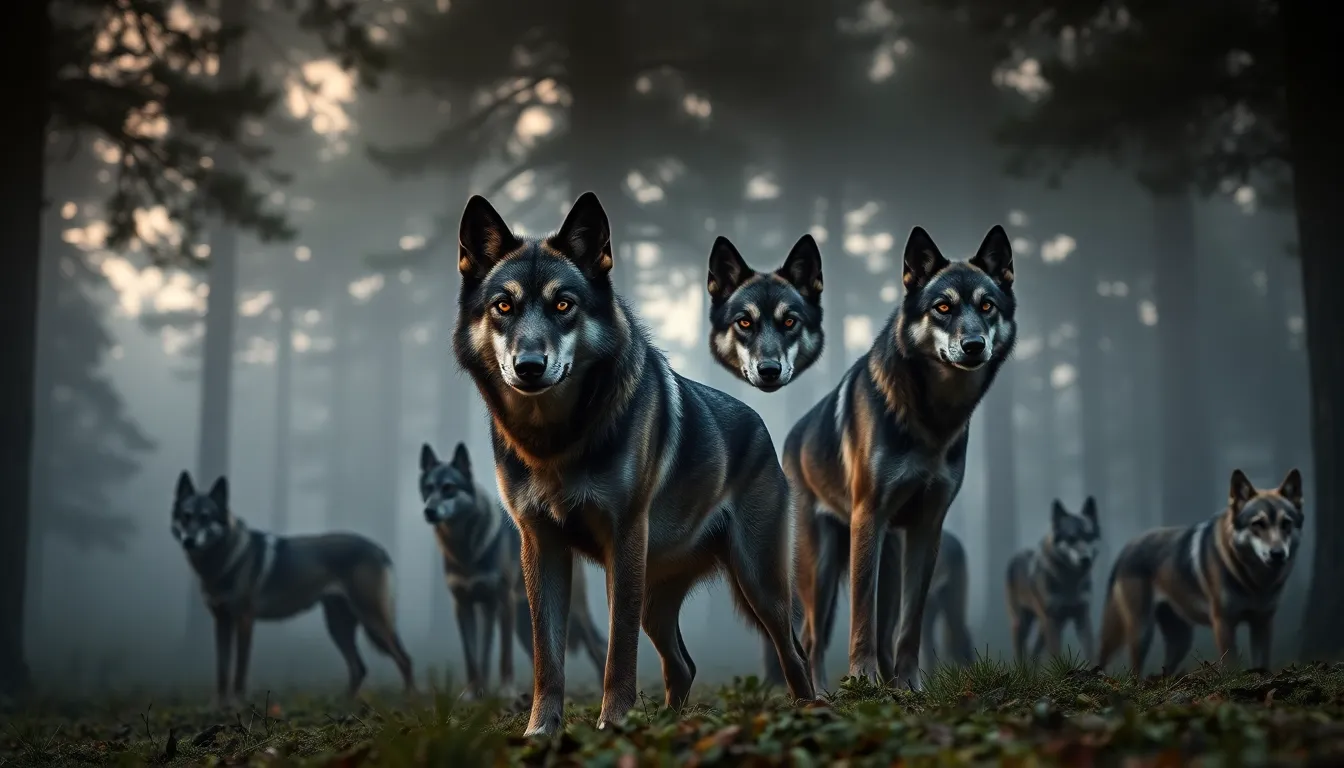
Forged with Wolf Blood: The Rarest Canine Copies
For enthusiasts captivated by the raw beauty of the wilderness, owning a companion that embodies the spirit of a wolf is a profound aspiration. This section delves into the most compelling examples of rare dog breeds that look like wolves, highlighting those with direct wolf ancestry or meticulous breeding for exact physical characteristics. These exceptional canines stand out due to their remarkable resemblance, genetic closeness to their wild relatives, and extreme rarity compared to more common domestic breeds.
Canine Descendants with Direct Wolf Ancestry
Two prominent breeds epitomize the genetic connection to wolves, having been developed by deliberately crossing domestic dogs with wolves. Their creation aimed to preserve the wolf’s physical prowess and aesthetic while attempting to integrate the temperament of a dog.
The Czechoslovakian Wolfdog
The Czechoslovakian Wolfdog, or Československý Vlčiak, originated in 1955 from an experimental crossing of German Shepherds with Carpathian Wolves. This unique initiative aimed to create a breed with the trainability of a German Shepherd and the stamina and resilience of a wolf. The breed received official recognition from the FCI (Fédération Cynologique Internationale) in 1982, solidifying its status as a distinct and formidable canine.
These majestic dogs possess an undeniable wolfish appearance, characterized by their erect ears, piercing amber or yellow eyes, and an agouti coat pattern that closely mirrors their wild ancestors. Males typically stand 65-70 cm (25.5-27.5 inches) at the shoulder and weigh between 26-30 kg (57-66 lbs). The initial generations of the breed possessed a significant 50% wolf ancestry, contributing to their profound genetic closeness.
Despite their established recognition, Czechoslovakian Wolfdogs remain incredibly rare. Their global population is estimated at only 3,000-5,000 individuals. Furthermore, fewer than 200 new registrations occur annually in countries like the Czech Republic, underscoring their exclusivity and challenging ownership requirements due to their strong instincts and high energy levels.
The Saarloos Wolfdog
Developed in the Netherlands during the 1930s by Leendert Saarloos, the Saarloos Wolfdog emerged from crossings between German Shepherds and European Wolves. Saarloos sought to create a natural, healthy breed, unburdened by perceived domestication issues, by reintroducing wolf blood. The breed earned FCI recognition in 1981, a year before its Czechoslovakian counterpart, establishing another distinct wolf-like breed.
Saarloos Wolfdogs are known for their powerful build, wolf-like gait, and expressive faces. Males typically reach a height of 65-75 cm (25.5-29.5 inches) and weigh 36-45 kg (79-99 lbs). Initial generations possessed 50% wolf ancestry, imbuing them with strong primitive instincts. They share many physical traits with wolves, including a long muzzle, straight tail, and dense coat, often in wolf-grey or wolf-brown shades.
This breed is equally rare, with an estimated global population ranging from 2,500-4,000 individuals. In its country of origin, the Netherlands, fewer than 150 new registrations are recorded each year. Both the Saarloos and Czechoslovakian Wolfdogs require experienced owners committed to extensive socialization and training to manage their unique blend of domestic and wild instincts effectively.
Masterfully Bred for Wolf-Like Appearance
While some breeds carry direct wolf blood, others have been selectively bred over generations to achieve a striking wolf-like resemblance without recent, direct crossbreeding. The goal is to capture the aesthetic of a wolf, including its powerful build and distinctive coat, through careful genetic selection from existing domestic breeds.
The Tamaskan Dog
The Tamaskan Dog is a prime example of a breed developed purely for its wolf-like appearance, rather than direct wolf crosses in its recent lineage. Originating in the late 1980s and 1990s, the Tamaskan was created through the careful crossing of various “northern breed” dogs, including the Siberian Husky, Alaskan Malamute, and even the Czechoslovakian Wolfdog in its foundational lines. This meticulous breeding program aimed to produce a dog with the impressive physical traits of a wolf but with a more predictable and tractable temperament.
Tamaskan Dogs are renowned for their exceptional wolfish looks, featuring a distinctive “wolf mask” on their faces, erect ears, and a dense double coat that comes in various shades of grey, red-grey, or black-grey agouti. Males typically stand 60-70 cm (24-27.5 inches) at the shoulder and weigh between 30-40 kg (66-88 lbs). Their strong, athletic build and keen, intelligent eyes make them truly stand out among other large breeds. These rare dog breeds that look like wolves are a testament to selective breeding.
Despite their growing popularity among those seeking a wolf-like companion, Tamaskan Dogs remain relatively rare. The estimated global population is around 6,000-8,000 individuals. Their distinct appearance and friendly yet intelligent disposition make them highly sought after by owners prepared for an active and engaging canine partner.
The Grey Wolf Blueprint: A Benchmark for Resemblance
To truly appreciate how closely these breeds resemble their wild ancestors, it is essential to consider the key physical traits of the Grey Wolf (Canis lupus). The Grey Wolf averages 66-81 cm (26-32 inches) at the shoulder and weighs 30-80 kg (66-176 lbs). These formidable animals are characterized by their striking agouti coat patterns, which provide natural camouflage, along with distinct erect ears, a long and powerful muzzle, a straight tail carried low, and often piercing amber or yellow eyes.
When comparing these benchmarks to the rare breeds discussed, the resemblance is striking. The Czechoslovakian Wolfdog and Saarloos Wolfdog fall directly within the lower to mid-range of the Grey Wolf’s size and weight, particularly for males. The Tamaskan Dog also closely aligns with these dimensions. All three breeds consistently exhibit the signature agouti coat patterns, erect ears, long muzzles, and amber or yellow eyes that are hallmarks of their wild counterparts. This strong alignment in physical characteristics is what makes them compelling examples of rare dog breeds that truly emulate the majestic appearance of wolves.
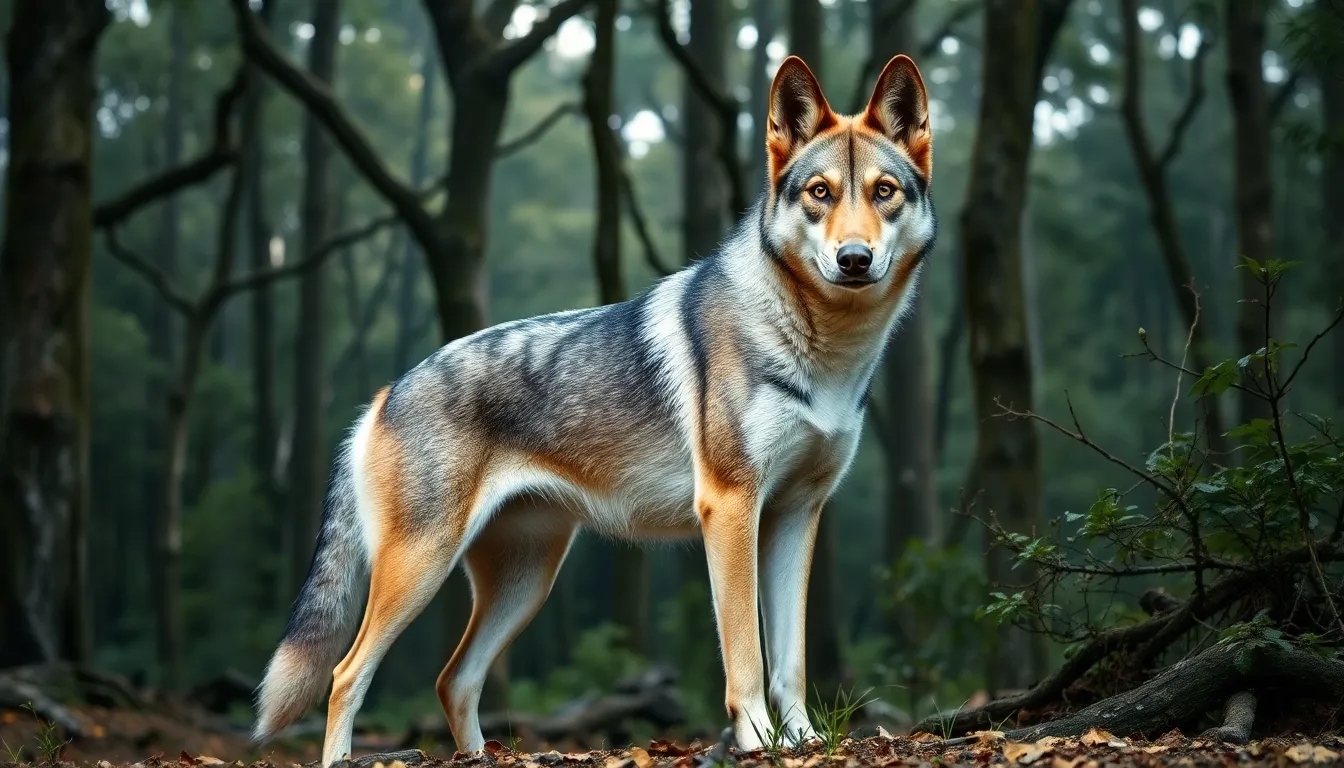
Defining Rarity and Wolf-Like Genetics
When we talk about rare dog breeds that look like wolves, we delve into a fascinating intersection of selective breeding, ancient genetics, and physical resemblance. Understanding what truly defines a breed as “rare” requires looking beyond casual observation. In the United States, organizations like the American Kennel Club (AKC) provide quantitative metrics. A breed is typically considered uncommon if it ranks outside the top 150 of the approximately 200 AKC-registered breeds. This means roughly a quarter of all recognized breeds fall into this category, indicating their limited presence in mainstream dog ownership. For example, the Azawakh, an elegant sighthound, consistently ranks around #188, recording less than 200 national registrations annually. These low numbers are a strong indicator of their relative rarity within the U.S.
Globally, the picture expands with the Fédération Cynologique Internationale (FCI) recognizing over 350 distinct dog breeds. Many of these breeds are incredibly specific to their regions of origin, leading to very small populations worldwide—often numbering only in the low thousands. This global scarcity underscores the challenges in maintaining genetic diversity and ensuring the long-term survival of such unique lineages. The dedication required from breeders and enthusiasts to preserve these rare breeds often involves extensive tracking of pedigrees and careful breeding programs designed to prevent genetic bottlenecks.
Unraveling Genetic Proximity to Wild Wolves
The journey of all domestic dogs began between 15,000 and 40,000 years ago, when they diverged from their wild wolf ancestors. This deep evolutionary connection is inherent in every canine, yet the degree of genetic proximity to wolves varies dramatically across breeds. Some modern breeds retain clearer genetic echoes of their wild past than others. For instance, the Czechoslovakian Wolfdog and the Saarloos Wolfdog are prime examples of breeds with documented, recent wolf introgression. This means they carry distinct genetic markers resulting from deliberate crosses with wolves in their more recent history, setting them apart from breeds like Poodles or Labradors, whose lineages have been shaped purely by human selection for specific traits over many millennia.
The genetic influence of wolves can manifest in various ways beyond just appearance. While not always directly translatable to behavior in every individual, these genetic foundations can contribute to traits such as heightened instincts, exceptional physical endurance, and a robust constitution. These characteristics often mirror the survival advantages found in their wild counterparts. Understanding this genetic blueprint is crucial when considering the needs and temperament of these wolf-like breeds, as their inherent characteristics might require specialized training and environments.
Hallmark Physical Traits of Wolf-Like Canines
When seeking rare dog breeds that look like wolves, certain key physical traits immediately stand out. These breeds typically exhibit a lean, athletic build, characterized by strong musculature and a deep chest, indicative of endurance and agility rather than bulk. This physical prowess is a direct reflection of the functional demands placed on their wild ancestors. Their coats are another defining feature, often showcasing an agouti pattern—a mesmerizing band of different colors on each individual hair shaft. This creates a multi-tonal, blended effect, providing natural camouflage and contributing significantly to their wild aesthetic.
A thick, dense undercoat is almost universally present in these breeds. This double coat provides superior insulation against harsh weather conditions, a vital adaptation for survival in diverse environments, just as it does for wolves. The color palette further enhances their resemblance, typically ranging from various shades of grey to black, pure white, and earthy browns, often complemented by lighter undersides on the belly and inner legs. These natural tones and patterns are crucial for blending into natural landscapes.
Beyond their body and coat, distinct cranial and facial features cement their wolf-like appearance. Erect ears, often triangular and set high on the head, convey alertness and keen hearing. A long, powerful muzzle, tapering smoothly from the skull, provides the classic elongated profile associated with wolves. Their eyes, typically almond-shaped and often amber or brown, hold an intense, intelligent gaze that many find captivating. Furthermore, a straight tail, carried naturally at hock level or slightly above, without a tight curl or excessive feathering, completes the silhouette. This natural tail carriage is in stark contrast to the tightly curled tails of many ancient dog breeds or the docked tails of working breeds.
The combination of these specific attributes – the lean build, the agouti coat, the thick undercoat, the characteristic colorations, erect ears, long muzzle, and straight tail – distinguishes these rare dog breeds that look like wolves from the vast majority of common canines. These traits are not merely superficial; they represent a carefully preserved lineage that offers a living link to the very origins of dog domestication. For prospective owners, appreciating these unique qualities means understanding a breed’s history and its inherent needs.
Such breeds often appeal to individuals who are drawn to the mystique and majesty of wolves but seek a domesticated companion. Responsible ownership of these distinctive canines requires extensive research into their specific exercise, training, and socialization requirements. Their intelligence and independence, often stemming from their close genetic ties to wolves, demand consistent, positive reinforcement training and ample mental stimulation. Owners must be prepared for a dog that thrives on activity and engagement, truly reflecting its ancestral heritage.
Maintaining the integrity of these rare wolf-like breeds is a vital part of canine conservation. Their uniqueness lies not only in their striking appearance but also in the genetic diversity they represent within the broader domestic dog population. By understanding the parameters of rarity and the specific genetic and physical markers of their wolf-like appearance, we gain a deeper appreciation for these magnificent animals and the evolutionary journey that has shaped them. The global recognition of breeds, even those with limited numbers, helps to safeguard their future and educates the public about their special place in the canine world. The annual AKC dog show, for instance, often features a wide array of breeds, offering a public platform for some of these uncommon and rare breeds to be seen and admired by a broader audience.
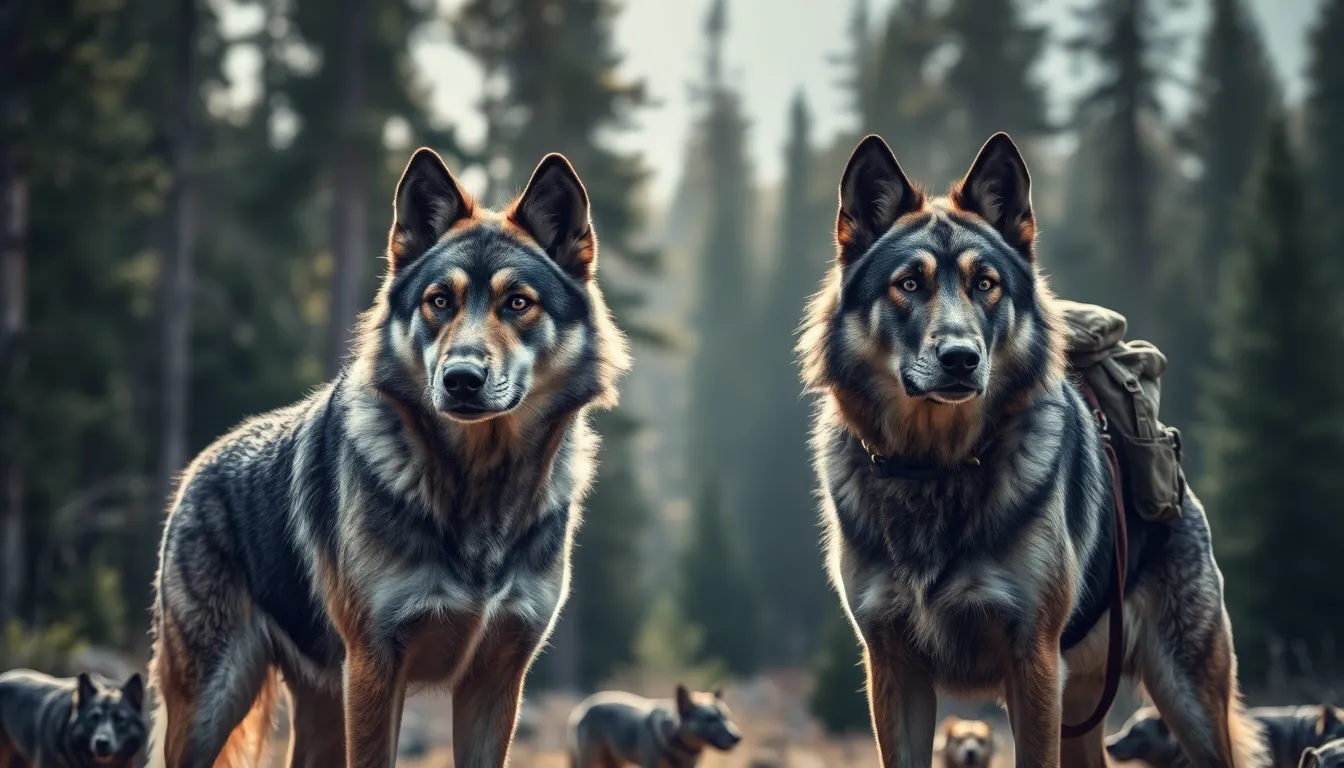
Beyond the Look: Global Fascination and Advanced Ownership Needs
The allure of canines that embody the wild spirit of their wolf ancestors is undeniable, capturing significant global attention. Many enthusiasts seek out rare dog breeds that look like wolves, drawn by their striking appearance and majestic presence. This fascination translates into substantial online inquiry, revealing a unique niche within the dog-owning community. Global search interest for terms like “wolf dog breeds” or “dogs that look like wolves” averages between 8,000 and 12,000 monthly queries. This consistent curiosity underscores a deep-seated appreciation for breeds that offer an echo of the wild, yet exist within the domestic sphere.
Global Appeal and Search Trends
Delving deeper into specific breed interest, the Czechoslovakian Wolfdog, a breed renowned for its close resemblance to wolves and military heritage, garners a notable 2,500 to 4,000 monthly global searches. Its striking profile and storied past contribute to its popularity among those seeking an extraordinary companion. Similarly, the Saarloos Wolfdog, developed in the Netherlands, captures considerable attention, receiving an average of 1,500 to 2,500 monthly queries. This breed is celebrated for its wolf-like appearance combined with a sensitive and independent nature. Furthermore, the Tamaskan Dog, often affectionately referred to as ‘the wolfdog without the wolf,’ registers 1,000 to 1,800 monthly searches, appealing to those who desire the aesthetic without the direct wolf content.
These figures underscore the dedicated following for such distinctive animals, reflecting a strong desire among prospective owners for pets that possess an extraordinary aesthetic and heritage. Discovering dogs with unique features often begins with a fascination for their appearance and lineage. However, when placed in context, the popularity of these breeds, while significant in their niche, remains a modest fraction of the mainstream. For comparison, a widely popular breed like the German Shepherd commands over 150,000 monthly global searches. This means that interest in wolf-like breeds constitutes approximately 1.5% to 3% of the overall mainstream breed search volume, highlighting their status as truly specialized companions rather than common household pets.
Understanding Unique Behavioral Traits
Beyond their captivating appearance, owning rare dog breeds that look like wolves necessitates a profound understanding of their specialized behavioral needs. These breeds, whether possessing strong wolf-like traits or direct wolf heritage, often retain instincts far removed from those of typical domestic dogs. Their intelligence, independence, and strong prey drive are inherent characteristics that require owners who are not only experienced but also deeply dedicated to extensive, consistent training and comprehensive socialization from an early age. This commitment is crucial for shaping a well-adjusted and manageable adult dog.
A critical concern for these breeds is ensuring adequate socialization. Insufficient exposure to a wide variety of people, environments, sounds, and other animals during their formative months can significantly impact their temperament and confidence. Research indicates that inadequate socialization in wolf-like breeds can lead to a 40% increased probability of fear-based aggression. This heightened risk is a serious consideration, as fear-based aggression can manifest as defensive biting or reactivity in unfamiliar situations. Emphasizing the importance of consistent, positive exposure throughout their development is paramount to fostering confidence, reducing anxiety, and promoting appropriate responses in diverse social settings.
Owners must recognize that these dogs are not simply “difficult” but are rather complex animals whose natural behaviors often conflict with typical household expectations. Early intervention, continuous training, and an owner’s willingness to adapt their lifestyle are vital. Understanding their need for mental stimulation and avoiding situations that might trigger their innate cautiousness or prey drive are key components of responsible ownership.
Essential Environmental Provisions
The environmental requirements for these specialized canines are equally stringent and demand careful consideration. Their inherent athleticism, powerful physique, and remarkable problem-solving abilities mean that standard containment methods are often insufficient. Prospective owners must proactively implement robust security measures to ensure their safety and prevent escapes. Conventional fences under 1.8 meters (or 6 feet) in height are frequently inadequate for preventing escapes, as these intelligent animals are often capable diggers, climbers, and even jumpers. Secure enclosures must be designed to cater to their innate drive to explore and test boundaries, potentially incorporating dig guards or overhead coverings.
Furthermore, the exercise demands of these breeds far exceed those of many common companion animals. While a typical companion breed might thrive on 30-60 minutes of daily activity, wolf-like breeds require a minimum of 2 hours of vigorous daily exercise. This isn’t merely about a casual stroll; it encompasses high-intensity activities such as long runs, challenging hikes, advanced obedience training sessions, agility work, or engaging scent-tracking games. Such activities are crucial not only for their physical health but also for their mental well-being, helping to channel their energy constructively.
Failing to meet these high energy requirements can lead to a range of undesirable outcomes, including destructive behaviors, excessive barking, anxiety, and other behavioral issues stemming from boredom and pent-up energy. The commitment needed to provide a stimulating and active lifestyle is substantial, making these breeds unsuitable for sedentary individuals or those with limited outdoor space. For those seeking common companion breeds for apartment living, the contrast in needs is stark, highlighting the unique demands of owning dogs that strongly resemble wolves.
Featured image generated using Flux AI
Source
American Kennel Club, “AKC Breed Popularity Rankings 2023”
Fédération Cynologique Internationale, “Breed Standards and Recognition”
Various breed club registries (e.g., Czechoslovakian Wolfdog Club of America, Saarloos Wolfdog Club of the UK, Tamaskan Dog Register)
Scientific journals focusing on canine genetics and behavior, including studies on domestic dog ancestry and wolf hybridization.